
Oregon Zoo’s Conservation Work for the Mazama Newt
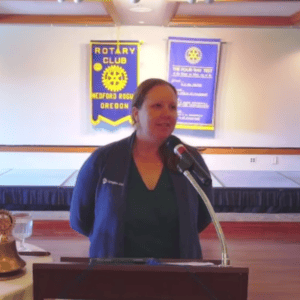
This week’s Rotary program highlighted the Oregon Zoo’s remarkable role in wildlife conservation across the Pacific Northwest. While many people think of zoos primarily as places to see animals, the Oregon Zoo has become a leader in recovering endangered native species.
 Past successes include helping prevent the extinction of the California condor, the Columbia Basin pygmy rabbit, and the Oregon silverspot butterfly, while also tripling the range of Oregon pond turtles through captive breeding and reintroduction efforts.
The Zoo’s newest challenge is the Mazama newt, a species found only in Crater Lake National Park. Closely related to the rough-skinned newt, common throughout western Oregon, the Mazama newt has experienced a dramatic decline over the past decade. Researchers attribute much of the decline to the spread of invasive signal crayfish, which prey on young newts and their eggs.
Working alongside the National Park Service, the Oregon Zoo has developed a 2025–2035 Mazama Newt Conservation Action Plan. The effort combines long-term population monitoring, research, habitat management, and conservation planning to stabilize and recover this unique species before it reaches the brink of extinction.
The presentation underscored how modern zoos have evolved into centers for conservation science, partnering with agencies and researchers to protect Oregon’s native wildlife for future generations. From condors to turtles, butterflies to pygmy rabbits—and now the Mazama newt—the Oregon Zoo continues to demonstrate that collaborative conservation can make a measurable difference.